REFLEXOLOGY REVISITED · COURSE REVIEW EDITION
← All chapters

Chapter 09 / 12 · 7 lessons

Shape a session around the client

Adapt the familiar session to different preferences, needs and time.

Review marks stay on this device.

Lessons

Chapter overview

Reflexology with Ruth • Section 9

Keep a dependable structure. Make room for the person.

Two people book the same service. One wants quiet and plenty of time to settle. The other wants to stay upright, talk, and leave in twenty minutes. Your job is to create an appropriate session with each person—not to make both people fit the same experience.

This written teaching package includes seven lessons, proposed narration, five original visual guides, contrasting plans, decision activities, a workbook, assessment, and filming guidance. Ruth's supplied experiences are identified; fictional clients and added teaching language are curriculum proposals. Videos remain to be recorded.

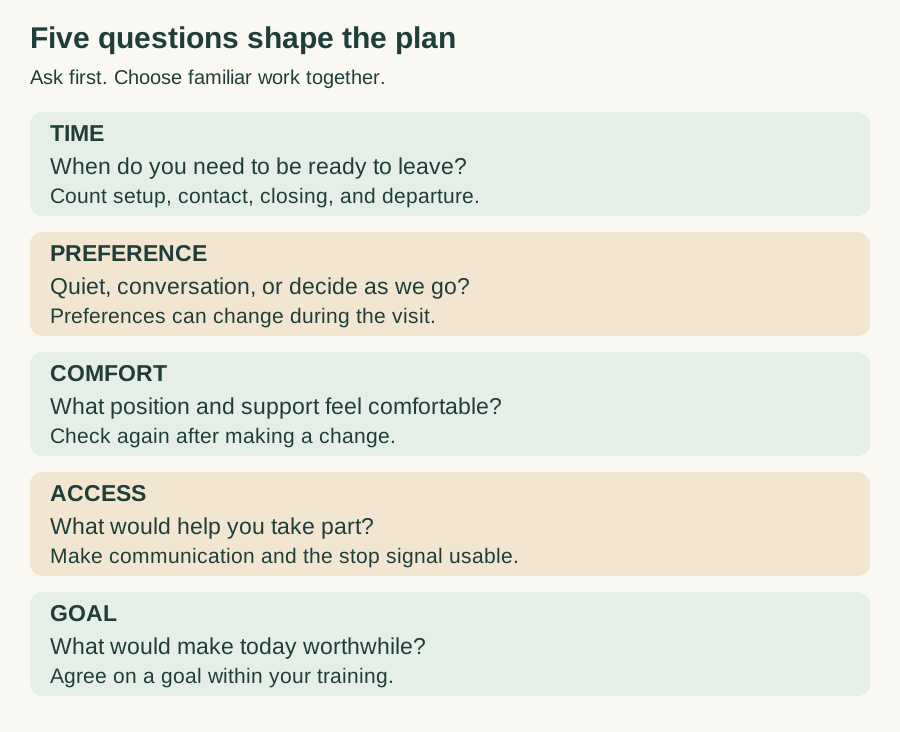
Five considerations surrounding the session plan: time, preference, comfort, access and goal

Lessons

Your learning route

What you will be able to do

  • Ask about appointment length, preferences, comfort, access needs, and goals without making assumptions.
  • Adapt the Section 7 sequence while protecting consent, support, check-ins, and closing.
  • Explain what you kept, shortened, omitted, or changed in two contrasting plans.
  • Respond respectfully to talking, quiet, tears, and changing preferences.
  • Distinguish a manageable adaptation from a reason to defer, seek guidance, or get urgent help.

Prerequisites: Sections 2, 5, 6, 7, and 8: safety and consent, setup, instructor-guided technique, a complete sequence, and observation. This section teaches planning; it does not add treatment protocols or counseling skills. Use dialogue-only rehearsal until the touch prerequisites are met.

Learning activity Suggested time
Seven short lessons 35 minutes
Demonstration and decision replay 10 minutes
Contrasting plans and scenario lab 20 minutes
Workbook and dialogue rehearsal 15 minutes
Knowledge check and feedback 10 minutes
Total, before optional partner practice 90 minutes

Pause between lessons. Before reading a model response, say what you would do and why. Timings are teaching proposals, not measured video lengths.

Lessons

Lesson 9.1 · Start with the person

Outcome: gather enough information to agree on a realistic plan. Suggested time: 5 minutes.

Proposed teaching script

“A foundational sequence gives you something dependable to return to. It does not tell you everything about the person in front of you. Before starting, find out what would make today's session comfortable and practical.

“Ask about the time they actually have, the position they prefer, whether conversation or quiet would be welcome, and anything they want you to avoid. You do not need their whole story. You need enough information to choose appropriate work together.”

Planning question Suggested wording How the answer changes the plan
Time “What time do you need to be ready to leave?” Reserve setup, closing, and departure time first
Preference “Would you enjoy quiet, light conversation, or deciding as we go?” Agree on interaction without making it permanent
Comfort “What position and support feel comfortable today?” Adjust supports and use only suitable learned contact
Access “What would help you communicate, get comfortable, or take part?” Agree on signals, information format, space, and assistance
Goal “What would make this a worthwhile visit for you?” Translate wishes into an achievable, in-scope plan

A useful goal: “A comfortable break with gentle foot contact.” A promise to avoid: “I will switch off your anxiety.” Reflexology is not established as a treatment for the range of conditions attributed to reflex points. Explain the service without promising organ effects or a particular nervous-system state. [1]

Try now: a client says, “I have twenty minutes.” Name two things you need to clarify before offering twenty minutes of touch.

Model response: Clarify whether twenty minutes includes intake and departure, and how much setup or communication time they need. Offer the amount of contact that fits safely; reschedule if essential steps cannot fit.

Lessons

Lesson 9.2 · Conversation can be a preference

Outcome: follow the client's communication needs without trying to produce sleep. Suggested time: 5 minutes.

Ruth's experience

Ruth says she generally does not talk during a session, but some clients seem more comfortable with conversation. Sometimes she talks with them throughout. At other times she notices yawning, stops initiating conversation, and the person may fall asleep. She wonders whether talking gives a busy mind something else to attend to.

That last explanation is her interpretation. Yawning or sleep does not prove a specific physiological mechanism, and staying awake does not mean the session failed. We have not established that conversation caused the change.

Proposed teaching script

“Quiet is an option, not a test. If light conversation helps someone feel comfortable, we can make room for it. If their replies become shorter, I can leave more space without declaring that something has happened inside their nervous system.

“I might say, ‘You don't need to keep talking for my sake. We can be quiet whenever you like.’ If they continue talking, I can respond. I do not need to steer them toward sleep.”

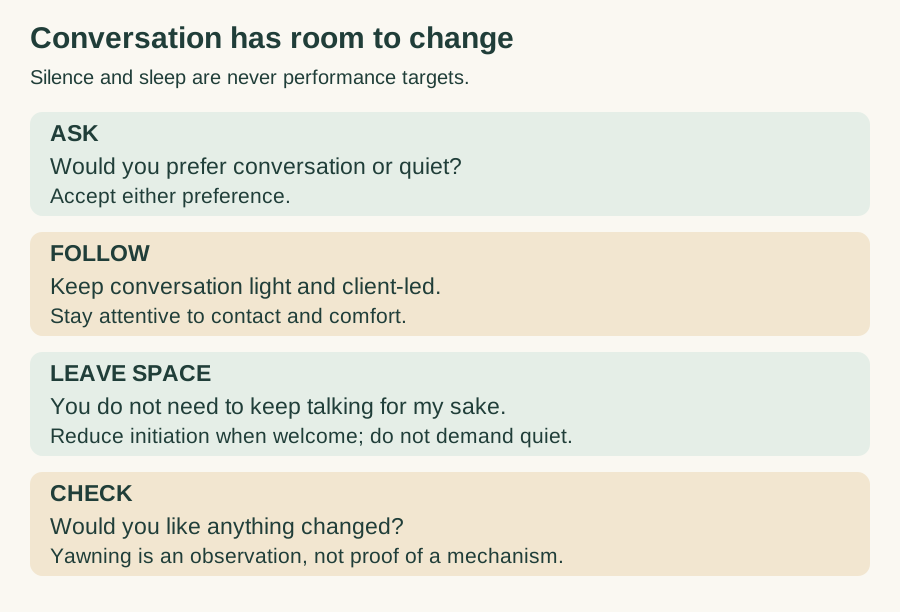
Conversation choices: ask, follow preference, leave space, check when needed

Keep conversation light and client-led. Do not fill the appointment with your own problems, probe for trauma, or take on a counseling role. If conversation distracts you from safe contact or observing comfort, pause the movement and simplify.

Rehearse: “Would you prefer a little conversation or some quiet?” Then practise accepting either answer without disappointment. When someone becomes drowsy, stay within the agreed plan; do not add new areas or techniques without renewed agreement.

Lessons

Lesson 9.3 · Shorter means simpler

Outcome: shorten the sequence without hurrying touch or removing essential safeguards. Suggested time: 5 minutes.

Ruth's adaptation

Ruth describes doing familiar work on both feet at the same time rather than doing so much individually on each foot. This is a planning idea, not a complete demonstration of a two-foot technique.

For beginners, retain the one-foot-at-a-time route from Section 7 unless an instructor has demonstrated and checked the exact simultaneous contact. Each foot must remain supported. Do not convert a movement that requires a supporting hand into unsupported one-handed work, lift both feet, or invent mirrored pressure techniques to save time.

Proposed teaching script

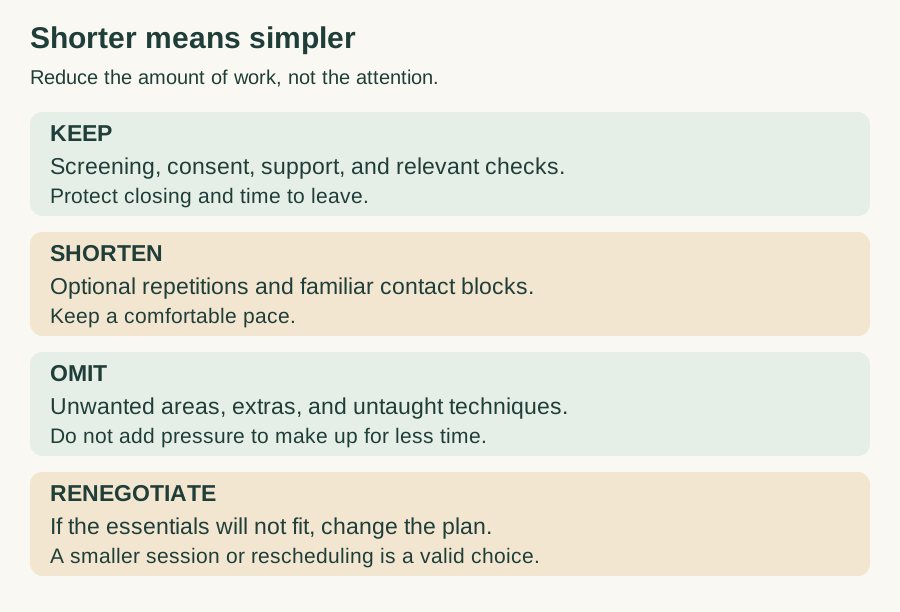
“A short session should still feel complete. Keep the agreement, an opening, familiar contact, and a clear ending. Reduce extra repetitions and optional areas before you reduce the time needed to listen or help the person leave comfortably.

“Work at a pace you can sustain. Doing less with attention is a valid plan. If the available time becomes too short, offer a smaller session or a different appointment.”

Keep Shorten Omit when appropriate
Suitability screening and consent Optional repetitions Head, face, tools, and other extras
Comfortable support Number of familiar passes Toe contact the client dislikes
Accessible stop signal and relevant checks Individual blocks, proportionately Untaught simultaneous techniques
Deliberate closing and departure time Explanations already understood; still invite questions Any attempt to force a dramatic result

Keep, shorten and omit guide for shorter sessions

Do not compensate with stronger pressure. Longer appointments also do not require stronger touch or more techniques. Repetition, pauses, and fewer areas may be appropriate at any duration.

Practice & reference

Timing lab · Three complete appointment budgets

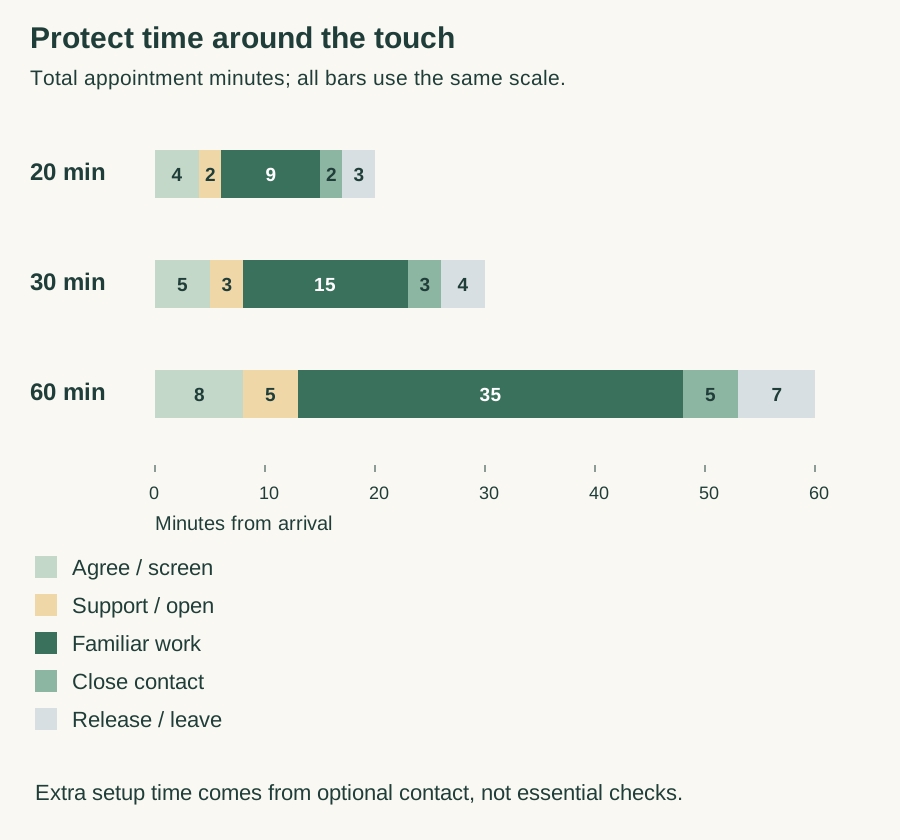
These proposed budgets include welcome, current suitability review, setup, contact, feedback, and departure. A fuller first-visit intake may require additional time or a separate appointment. Do not abbreviate unresolved screening to fit a chart.

Section 7's thirty-minute practice began after fuller screening and room preparation. These are total appointment examples, so their contact time is different. State that distinction when booking.

Phase 20-minute visit 30-minute visit 60-minute visit
Welcome, current screening, preferences, agreement 4 5 8
Positioning and opening contact 2 3 5
Familiar work, including transitions and checks 9 15 35
Closing contact 2 3 5
Release, feedback, getting ready to leave 3 4 7
Total minutes 20 30 60

Shared-scale appointment timelines comparing time reserved for each phase

Twenty-minute example: 00–04 agree; 04–06 support and open; 06–10 first foot; 10–11 supported change; 11–15 second foot; 15–17 close; 17–20 release and depart. Use the Section 7 sequence functions: settle, sole pass, ball/toe-pad pass if welcome, heel cradle, return/release. Reduce repetitions within each block; do not treat these budgets as prolonged pressure on a point.

Thirty-minute example: 00–05 agree; 05–08 open; 08–15 first foot; 15–16 change; 16–23 second foot; 23–26 close; 26–30 release and depart.

Sixty-minute example: 00–08 agree; 08–13 open; 13–30 first foot; 30–31 change; 31–48 second foot; 48–53 close; 53–60 release and depart. The extended blocks allow familiar repetitions, comfortable pauses, and adjustments—not continuous pressure or mandatory touch for all thirty-five minutes. End touch earlier if preferred.

Clock challenge: Your twenty-minute client needs three extra minutes to get comfortable. One possible revision: agreement 4, positioning/opening 5, familiar work 6, closing 2, departure 3. The six-minute middle might be 2½ minutes per foot and one minute to change. If this becomes impractical, stop and renegotiate. Never hurry the client’s movement.

Lessons

Lesson 9.4 · Access is part of the plan

Outcome: adjust communication, environment, and positioning with the client. Suggested time: 5 minutes.

Proposed teaching script

“Ask what helps; do not decide what a person can do by looking at them. Speak directly to the client. An access need may change our setup or communication without changing the person's goal for the visit.

“You can explain what your space and equipment allow. If the setup cannot support someone safely, be honest and work toward an accessible alternative.”

Client preference or need Possible agreed adaptation Beginner boundary
Wants to remain in their own chair Clear approach space; suitable supported foot position Do not improvise lifting or transfers beyond training
Needs spoken explanations or visual orientation Describe the room and contact before touching; agree on cues Do not assume an eye mask or closed eyes is welcome
Uses written communication or hears better face-to-face Discuss the plan before positioning; establish a visible stop signal Do not rely on a whispered question they cannot access
Sensitive to sound, scent, light, or unexpected touch Reduce optional stimuli; announce changes; predictable touch Do not insist on music, fragrance, or “relaxing” accessories
Needs more time to move or respond Increase setup and departure budgets; reduce optional contact Do not rush or speak only to a companion
Wants a support person present Ask the client what role the person should have; protect privacy A companion does not replace the client's choices

These are proposed practical accommodations, not an exhaustive accessibility standard. Ask one question at a time, allow processing time, and use the client's preferred communication method. Being nonspeaking does not mean being unable to consent. If valid agreement cannot be established, do not begin.

Practice: explain a change of foot using both a short spoken cue and an agreed nonverbal cue. Check that the learner acting as client can actually use the stop signal in the chosen position.

Lessons

Lesson 9.5 · Tears call for choice

Outcome: respond to distress without diagnosing or turning reflexology into therapy. Suggested time: 5 minutes.

Ruth's teaching contribution

Ruth suggests leaving the eye mask off and keeping the interaction more conversational when someone arrives in tears, especially when the beginner has no other therapeutic training. Her central concern is to avoid taking a distressed person into an experience the practitioner is not equipped to support.

Beginner refinement: tears alone do not tell you the cause, indicate a diagnosis, or establish whether to continue. Pause before touch. Offer time and choices. Keeping the face uncovered is a sensible starting point in this teaching scenario, but it is not a treatment for distress and does not by itself make continuing appropriate. Eye coverings are optional for everyone.

Proposed demonstration dialogue

Client: “I'm sorry. I don't know why I'm crying.”

Practitioner: “You don't need to apologize or explain. Let's pause. Would you prefer some time, to end for today, or to discuss a simpler session?”

Client: “I'd like to stay. Please keep talking to me.”

Practitioner: “We can keep this interactive, leave the mask off, and use the familiar gentle foot contact we've discussed. I'm not trained to help process what you're going through. Would that still be helpful, and is it okay to begin?”

Only proceed when the person can communicate a clear choice, appears able to participate, screening supports it, and the practitioner can stay within training. Check comfort after beginning. Do not interpret tears as a release, encourage catharsis, ask for trauma details, or prescribe breathing exercises to manage an emotional crisis.

If they remain overwhelmed, cannot communicate a choice despite accessible support, or distress escalates, end or defer the session and help identify appropriate support. If there is immediate danger, activate local emergency help. A request for counseling calls for a qualified mental-health professional, not additional reflex-point work.

The emphasis on safety, collaboration, and client choice is informed by SAMHSA's principles. This lesson is not trauma-treatment training. [2]

Say it aloud: “We can stop here. You haven't done anything wrong. This needs support beyond what I can offer in this session.”


Lessons

Lesson 9.6 · Know when to defer

Outcome: choose the right next action and explain it without alarming or diagnosing. Suggested time: 5 minutes.

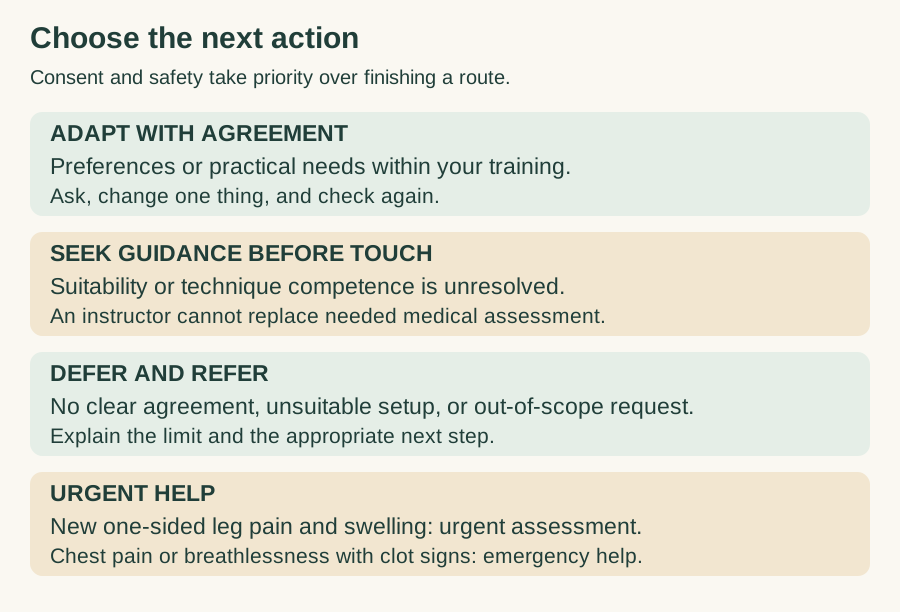
Four action levels: adapt, seek guidance, defer and refer, urgent help

Situation Next action Suggested wording
Wants conversation, no mask, a different comfortable position Adapt with agreement “We can change that. Let’s check the new setup.”
Requests a technique, tool, forceful stretch, or pressure method not taught Decline that element; offer a suitable learned alternative or seek instructor guidance “That technique is beyond my training. I can offer the familiar gentle work, if suitable.”
Reports altered sensation, recent surgery, or a condition affecting circulation/healing that has not been addressed in screening Defer touch pending appropriate qualified guidance “I need guidance about whether this contact is appropriate before we begin.”
Broken or infected skin, acute injury, new unexplained pain, or inability to position safely Do not work on the affected area; use Section 2 suitability process and defer when uncertain “I don’t want to guess about this. Let’s arrange appropriate advice first.”
Requests diagnosis, organ treatment, medication advice, or trauma processing Explain scope; refer the request appropriately “I can offer a comfort-focused session. I can’t diagnose or treat that concern.”
Cannot establish informed agreement, or client withdraws consent Do not start, or stop “We’ll stop. We only continue with your agreement.”
New unexplained one-sided leg pain and swelling Defer entire session and recommend urgent medical assessment “These symptoms need urgent medical assessment. I can’t assess the cause here.”
Chest pain or breathlessness with possible clot symptoms Call local emergency services; follow dispatcher instructions “We need emergency medical help now.”

The NHS identifies one-sided pain and swelling as possible DVT symptoms and advises urgent assessment; associated chest pain or breathlessness requires emergency help. Do not test for a clot through pressure, work on the other foot as a workaround, or wait for a routine instructor reply. Use the local emergency number, such as 911 in the United States. [3]

General manual-therapy safety information notes rare serious harms and the importance of appropriately trained practitioners. Our conservative beginner boundaries are teaching choices; massage evidence is not automatically evidence for a reflexology protocol. Medical advice does not supply missing technique training. [4]

Avoid blanket exclusions: pregnancy, disability, age, or a diagnosis alone should not replace individualized screening and relevant training. A client may be suitable for another trained practitioner even when the request is beyond this beginner course.

Guidance request template: “The client reports [relevant facts]. I have paused because [specific uncertainty]. The proposed contact is [learned technique and area]. What suitability information or additional training is needed?” Share only necessary information through an appropriate channel and protect confidentiality.

Lessons

Lesson 9.7 · Explain and review your choices

Outcome: connect every adaptation to a client need and check whether it helped. Suggested time: 5 minutes.

Proposed teaching script

“A good plan is something you can explain in ordinary language. ‘We kept the opening and closing, shortened repeated passes, and left out toe contact because you asked us to.’

“Afterward, ask what worked for the person. They may value that you listened or finished on time. They do not have to report a special sensation to make the session worthwhile.”

Close the loop

  • Confirm the plan before touch: “Today we have twenty minutes total, with a short feet-only session and time to get ready to leave.”
  • Announce changes: “We spent longer getting comfortable. We can shorten the repeated passes and still finish calmly.”
  • Ask after a meaningful adaptation: “How is this position now?”
  • Finish with feedback: “What would you keep or change next time?”
  • Document preferences, agreed changes, relevant observations, and the client's own report. Avoid speculative labels.

Example record: “Client requested conversation and no toe contact. Agreed on twenty-minute visit. Both feet supported; shortened sole passes and heel cradles used. Client asked for quiet midway; practitioner stopped initiating conversation. Client reported position remained comfortable. Closed on time.”

Do not write “released trauma” or “parasympathetic system activated” based on tears, yawning, or sleep. Apply Section 8's distinction between observation, report, and interpretation.

Practice & reference

Two clients · Two deliberately different plans

Fictional teaching cases, informed by Ruth's examples. No names, diagnoses, or outcomes below are claimed as actual client histories.

Decision Alex: a quiet, unhurried visit Morgan: an interactive, shorter visit
Total appointment 60 minutes; screening can be completed in allocated time 20 minutes; current screening can be completed in allocated time
Goal in client's words “A quiet break without feeling hurried.” “A comfortable break before I leave; talking helps me settle.”
Preferences and access Comfortable supported recline; quiet; feet only Remain upright in suitable supported chair; light conversation; no toes
Agreement and setup 8 minutes agreement + 5 opening/support 4 minutes agreement + 2 opening/support
Main sequence 17 minutes first foot, 1 transition, 17 second foot; familiar passes and pauses 4 minutes first foot, 1 transition, 4 second foot; sole passes and heel contact
Closing and departure 5 minutes closing + 7 release/feedback/departure 2 minutes closing + 3 release/feedback/departure
What changes and why More time for familiar repetitions and pauses, consistent with preference Fewer repetitions, no toe-pad pass, conversation and upright support chosen together
Mid-session check Ask at useful transitions without unnecessary chatter Offer space if replies shorten; accept continued conversation if wanted
What does not change Consent, support, scope, stop signal, relevant checks Consent, support, scope, stop signal, relevant checks
Fallback End contact early if rest or position becomes uncomfortable Renegotiate contact time if setup takes longer; reschedule if essentials will not fit

Neither plan promises sleep. Neither includes new treatment points. Both use the Section 7 functions with an explained omission where relevant.

Optional instructor-demonstrated variation: Morgan’s plan could use suitable learned simultaneous contact during part of the nine-minute middle. Only use it after competence in that exact contact has been checked. Otherwise the sequential plan above is complete and usable.

Explain the contrast: Alex has more time and prefers quiet; Morgan has a firm departure time and prefers interaction. The changes serve their stated needs. They are not responses to an invented diagnosis or a prediction about how deeply either will relax.

Practice & reference

Scenario lab · Decide before revealing

1. “I thought a real session had to be silent.”

The client prefers talking but worries about doing reflexology wrong. What would you say?

Model response: “There’s no requirement to be silent. We can have light conversation, and you can change your mind.” Agree on preference; avoid making talking a guaranteed relaxation technique.

2. The late arrival

A client arrives ten minutes late to a thirty-minute slot and needs help adjusting supports. What stays protected?

Model response: Reconfirm the actual departure time. Protect screening, consent, support, closing, and departure. Offer less contact with fewer repetitions, or reschedule if those essentials cannot fit. Do not silently rush the remaining sequence.

3. Tears at the door

The client cries, apologizes, and says they are unsure whether they want touch.

Model response: Pause before touch. Offer time, ending, or discussion of a simpler session. Do not cover their eyes or touch to calm them without agreement. If they remain unsure, defer; do not persuade them to continue.

4. “Harder—I want you to break it up.”

The request goes beyond the learner's training.

Model response: Decline the requested pressure or treatment claim. Offer a suitable familiar alternative if welcome. If the client wants only the untaught intervention, defer and suggest an appropriately qualified practitioner.

5. A new swollen leg

The client mentions unexplained swelling and pain on one side since yesterday and asks you to work around it.

Model response: Defer the entire session and recommend urgent medical assessment. Do not diagnose or test it. Chest pain or breathlessness adds an emergency response. A different reflexology area is not a substitute for assessment. [3]

6. “Please speak where I can see your face.”

The current recline makes communication difficult.

Model response: Pause and ask about the preferred communication setup. Adjust position if comfortable and safe, discuss the plan face-to-face, and establish an accessible stop signal. Reduce contact time if needed; do not assume a companion should answer.

Practice & reference

Workbook · Design two contrasting sessions

Use fictional profiles or anonymized practice partners. Do not include identifying or sensitive details. Complete both plans before comparing them.

Plan A

Client goal, total appointment length, and departure time: ___ Preferences, comfortable position, and access arrangements: ___ Suitability decision, consent, and agreed stop signal: ___ Minute-by-minute phases including setup and departure: ___ Techniques kept, shortened, omitted, and reasons: ___ One likely change during the visit and my response: ___ My exact sentence if I need to defer: ___

Plan B

Client goal, total appointment length, and departure time: ___ Preferences, comfortable position, and access arrangements: ___ Suitability decision, consent, and agreed stop signal: ___ Minute-by-minute phases including setup and departure: ___ Techniques kept, shortened, omitted, and reasons: ___ One likely change during the visit and my response: ___ My exact sentence if I need to defer: ___

Explain the contrast

Three differences between the plans and the client need behind each: ___ Essentials preserved in both plans: ___ What I would ask the client afterward to find out whether each adaptation helped: ___

Practice & reference

Practice · Rehearse the decision before the touch

Fifteen-minute dialogue practice: work in pairs. Use five minutes for Plan A, five for Plan B, and five for feedback. Swap practitioner and client roles between plans. No one needs to disclose personal distress; use the fictional prompts.

In each round, the client selects one change: “I would like more conversation,” “I need to sit differently,” or “I only have ten minutes left.” The practitioner pauses, clarifies, offers a proportionate adaptation, and restates the revised plan.

Optional touch practice: after prerequisites and suitability screening, practise one twenty-minute plan with a consenting adult and appropriate supervision. Use only learned techniques. Do not simulate a crisis or deliberately provoke emotional reactions. Stop when requested. Debrief separately from the client's departure budget.

Observer checklist

  • Asked about the person's goal and practical needs.
  • Defined total time versus contact time.
  • Established accessible consent and a stop signal.
  • Chose only suitable learned contact.
  • Explained a change and checked agreement.
  • Kept support, closing, and departure time.
  • Used a clear boundary or deferral statement when needed.
  • Asked for feedback without leading the client toward a desired result.

One effective sentence I heard: ___ One choice that needs a clearer reason: ___ One thing to practise again: ___

Practice & reference

Knowledge check · Ten decisions

Answer before opening the key. Explain your reasoning in a sentence.

  1. A client asks to talk throughout. Must you redirect them to silence?
  2. What does yawning establish about the client's nervous system?
  3. List four elements you protect when shortening an appointment.
  4. Why can “both feet at once” be inappropriate for a beginner?
  5. A twenty-minute slot needs three extra setup minutes. How can you revise the 4 + 2 + 9 + 2 + 3 budget?
  6. Someone cries and is unsure about touch. What is your first action?
  7. Is leaving the eye mask off sufficient to decide that a session can continue?
  8. What do you do about new unexplained one-sided leg pain and swelling?
  9. A client has a disability. Is that alone a reason to defer?
  10. What should your notes say if conversation is followed by yawning?

My answers and reasons: ___

Practice & reference

Answer key and practical assessment

  1. No. Agree on comfortable interaction and allow preferences to change. Keep professional boundaries.
  2. Only that yawning occurred. It does not establish a particular nervous-system state, mechanism, or successful outcome.
  3. Suitable examples: screening, consent, support, stop signal, relevant checks, closing, departure time.
  4. A learned movement may depend on one hand supporting the foot. Simultaneous work requires instruction and demonstrated competence in that exact contact.
  5. One option is 4 + 5 + 6 + 2 + 3 = 20 minutes, with fewer repetitions in the middle. If safe, comfortable essentials cannot fit, renegotiate or reschedule.
  6. Pause before touch and offer time and choices. Do not begin while agreement remains unclear.
  7. No. Current suitability, clear agreement, ability to participate, and practitioner competence still matter.
  8. Defer and recommend urgent medical assessment. With chest pain or breathlessness, activate emergency help. Do not diagnose or use another treatment area as a workaround. [3]
  9. No. Ask about individual access needs and suitability. Defer only when an unresolved safety, consent, or competence issue requires it.
  10. Record the client's preference, the observed yawning if relevant, the adjustment made, and their report. Do not claim conversation caused a physiological shift.

Practical submission

Submit two complete contrasting plans and a three-minute spoken explanation or equivalent written response. Include one appropriate deferral sentence and one in-session revision. Identifiable client recordings are not required.

Criterion 0: missing/unsafe 1: developing 2: ready for this exercise
Person-centered planning Assumptions replace inquiry Some preferences identified All five planning considerations addressed
Time budget Wrong total or essential phase missing Correct total, unclear contact time Correct total, clear phases and fallback
Sequence adaptation Untaught or unsupported work Changes lack clear reasons Familiar sequence adapted with reasons
Consent and communication Proceeds without agreement Check-ins vague Accessible agreement, signals and rechecks
Boundaries Misses referral or urgent action Recognizes concern, unclear action Appropriate adaptation, deferral or help
Reflection Claims unverified effects Partial distinction Observation and client report kept separate

Proposed pass standard: at least 10/12, with a score of 2 in consent and boundaries. Unsafe touch, ignoring a stop request, or missing an urgent scenario requires feedback and reassessment regardless of total. This is a section-level teaching assessment, not professional certification or authorization to practise.

Production & sources

Demonstration and filming plan

Use actors or consenting demonstration partners. Label dramatizations clearly. Do not film someone in actual distress to obtain an emotional scene.

Segment Approximate time Show Learning overlay
Introduction 1 minute Ruth describes the five planning questions Time • preference • comfort • access • goal
Contrasting intakes 2 minutes Alex requests quiet; Morgan requests conversation and upright support Ask; do not assume
Shortening the route 2 minutes Familiar opening, fewer repetitions, supported transition, closing Reduce repetitions; protect essentials
Optional two-foot comparison 1 minute Only a contact Ruth has demonstrated and judged teachable; both feet supported Requires instruction in this exact contact
Conversation to quiet 1 minute Client replies less; practitioner leaves space No requirement to sleep
Tears and choice 1 minute Dialogue-only pause; time, ending, or simpler plan offered Renew agreement before touch
Deferral 1 minute Learner declines untaught work and models an urgent referral sentence Choose the right next action
Debrief 1 minute Compare the two written plans Explain what changed and why

Ten-minute edited demonstration total. Use a wide shot for support and posture, a close view for familiar contact, and readable captions for choices. Provide a transcript and descriptions of visually demonstrated support changes. Timelines must identify omitted footage; do not present an edited clip as a real-time twenty-minute session.

The optional simultaneous segment must be demonstrated and checked before publication. If not included, use the same minute to compare the sequential plans; the lesson still functions without a new technique.

Replay prompts: What was requested? What changed? What stayed protected? When would this learner stop? Pause after each scene and ask the student to answer before displaying the model reasoning.

Practice & reference

Pocket guide · A plan you can explain

ASK: What do you want from today? How much total time do we have? What helps you participate comfortably?

AGREE: Areas, familiar contact, position, communication, stop signal, and finish time.

ADAPT: Fewer repetitions; optional areas omitted; conversation or quiet; comfortable support. Only use techniques already learned.

PROTECT: Screening, consent, support, relevant check-ins, closing, departure.

PAUSE: Uncertainty, discomfort, distress, or a changed preference. Stop immediately for a stop request.

DEFER: Suitability or agreement unresolved, safe setup unavailable, or request beyond competence. Urgent symptoms need urgent medical help.

REVIEW: What worked for this person? What would they change next time?

“I changed ___ because the client requested or needed ___. I checked by ___. Next time I would ___.”

Production & sources

Sources and teaching boundaries

Sources checked September 24, 2026. These support specific evidence and safety points; they do not validate our proposed appointment budgets, fictional cases, assessment threshold, or particular contact sequence.

[1] NCCIH: Reflexology. Supports the evidence boundary around reflex-point and health-effect claims. It does not establish conversation as a physiological intervention or this lesson's timing model as effective treatment.

[2] SAMHSA: Trauma-Informed Approaches and Programs. Safety, transparency, collaboration, and voice/choice inform our proposed communication approach. This is not a reflexology protocol or authorization to provide trauma therapy.

[3] NHS: DVT. Source for possible clot symptoms and urgent versus emergency medical action. The source uses UK service numbers; teaching here directs learners to their local services.

[4] NCCIH: Massage Therapy—What You Need To Know. General manual-therapy risk context. It is not evidence that a beginner may safely manage every condition with reflexology.

Local curriculum continuity: Section 2 supplies fuller consent/suitability processes; Section 5 supports room preparation; Section 6 supplies instructor-guided contact; Section 7 supplies the proposed foundational route; Section 8 separates observation from interpretation. This section does not replace those prerequisites.

Ruth's contribution: preference-sensitive conversation, reducing individual-foot work through familiar two-foot contact, and an uncovered, interactive approach when someone arrives distressed. The separate source notes preserve her wording and distinguish added material.

Publication status: complete written teaching draft. Ruth's editorial adoption, exact technique demonstration, rehearsal, and video recording remain production steps. Sources and local professional requirements should be rechecked before course release.

A note for this section

Review workspace

Where your comments live

Connect to the website to share notes with each other. On a static host, use this browser and export your comments to share them.

The access code is in the separate upload guide. Everyone with it can read, edit and resolve review notes.


Device comments are kept in this browser, not sent to anyone. Export a backup before clearing browser data or switching devices.