
REFLEXOLOGY REVISITED · COURSE REVIEW EDITION
← All chapters

Chapter 11 / 12 · 7 lessons

Guided practice & assessment

Turn repeated practice and specific feedback into observable skills.

Review marks stay on this device.

Lessons

Chapter overview

Reflexology with Ruth • Section 11

Practice until you can stay with the person, even when the plan changes.

Competence is not a perfect performance or a dramatic client response. It is the ability to offer familiar work with care, recognize what is happening, ask when uncertain, and make a sensible next decision.

Ruth wants students to develop presence rather than hunt for something wrong in the feet. She describes the energetic aspect as central to her experience of the work. In this section, that perspective can guide personal attention; assessment rests on observable actions and the client's own account. A reviewer cannot verify energy transfer, diagnose through touch, or certify a healing outcome from a recording. Reflexology's proposed correspondence between foot areas and healing elsewhere has not been established. [1]

This complete teaching draft includes seven lessons, five visual guides, a practice pathway, reusable forms, demonstration scripts, scenarios, a knowledge check, and an optional practical assessment. Numbers, service terms, assessment rules, certificate wording, and directory policies below are proposed defaults for instructor adoption. They are not an existing offer. No submission service or certificate automation is connected to this learning page.
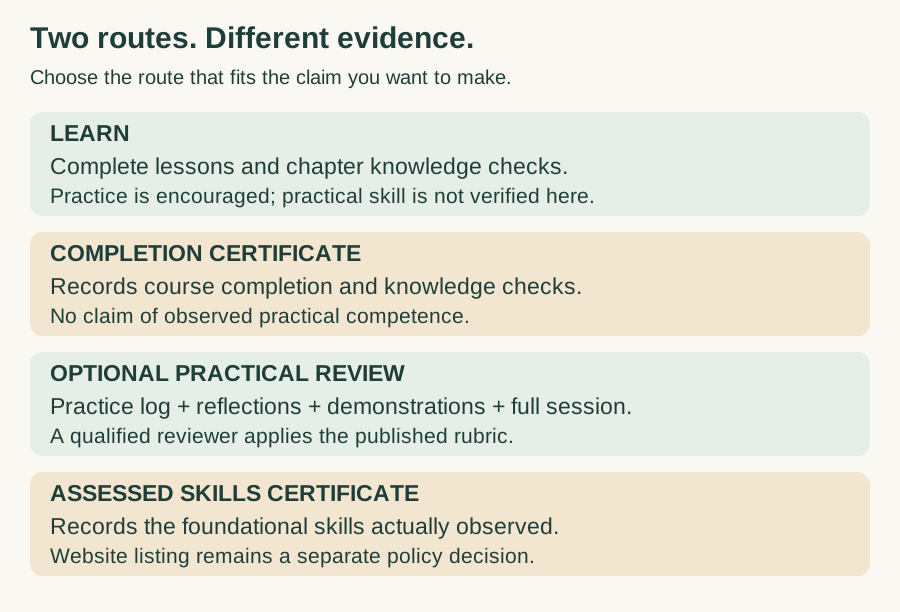
Two learning routes: course completion and optional reviewed practical skills

Lessons

Your learning route

By the end, you can:

  • Plan repeated practice with different willing partners and use feedback to change one behavior at a time.
  • Keep a short learning record without searching for pathology or making a SOAP-note quota the goal.
  • Demonstrate communication, setup, contact, pacing, adaptation, closing, and documentation.
  • Distinguish a useful pause from an unresolved skill gap.
  • Prepare a private, reviewable submission if you choose practical assessment.
  • Explain exactly what each course certificate does and does not establish.

Prerequisites: Complete Sections 1–10 and their learning checks before a final practical submission. Follow the suitability, consent, hygiene, and scope guidance in Section 2, the setup guidance in Section 5, and only the contact taught in Sections 6–10. Begin with consenting adult practice partners for whom the foundational work is suitable. This assessment uses feet-only foundational work; devices, scalp work, unfamiliar techniques, and medical problem-solving are outside its scope.

Activity Suggested time
Seven lessons 40 minutes
Demonstration and rehearsal lab 15 minutes
Scenario lab 15 minutes
Workbook and quiz 20 minutes
Total study time for this section 90 minutes
Practice pathway Separate; approximately 2–4 weeks at a comfortable pace

Practice frequency is flexible. The aim is repeatable skill, not finishing the calendar fastest. You may need more sessions than the suggested starting minimum.

Before you begin: When you lose your place, what do you tend to do—rush, add a technique, freeze, or ask for help?

My current habit and one thing I want to change: ___

Lessons

Lesson 11.1 · What counts as competent?

Outcome: explain why presence and observable skill belong together. Suggested time: 5 minutes.

Proposed narration for Ruth

“I do not need you to find a problem in every foot. I want you to notice the person you are working with. Are they comfortable? Can they tell you when something needs to change? Can you stay kind and attentive when the session is quieter, busier, or less predictable than you expected?

“You may experience the work energetically, as I do, or describe your attention in different words. You do not have to make someone feel what you feel. What I need to see is how you offer the work, how you listen, and what you do with the information they give you.”

Presence becomes visible through behavior: you ask a relevant question and wait; keep a supported position; notice a request; respond without argument; and finish without rushing the person. Looking serene is not enough. Closed eyes, tears, warmth, silence, or sleep are not pass criteria.

A route supports you; it does not overrule the client. Use the familiar route from Section 7 as a scaffold. You can shorten a block, omit an unwanted area, or return to a comfortable familiar contact when appropriate and agreed. You must still demonstrate the required skills. Flexible does not mean improvised beyond your training.

Compare two learners

Learner A remembers every movement but continues after the partner says the contact is uncomfortable. Learner B pauses, supports the foot, asks what should change, and resumes a simpler agreed step. Learner B shows stronger judgment. Learner A needs further practice before passing.

Try now: Say aloud, “I can change the plan and still offer a complete session.” Name one change that preserves comfort and one change that would exceed your training.

Lessons

Lesson 11.2 · Practice with a purpose

Outcome: use repetition, variety, and feedback to prepare for assessment. Suggested time: 6 minutes.

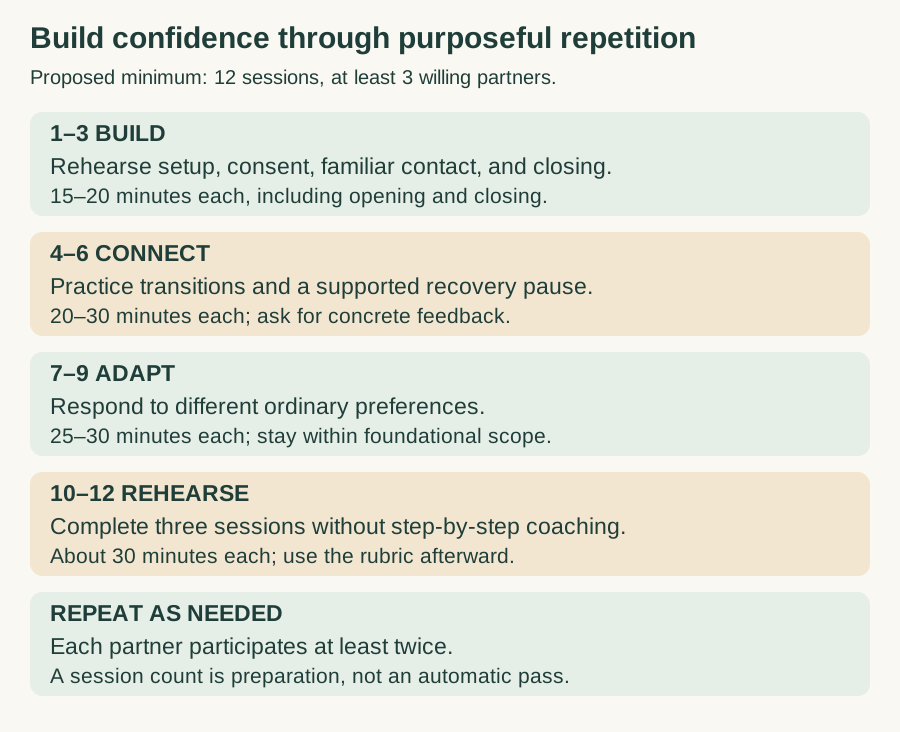
The proposed pathway is 12 logged sessions with at least three consenting adult partners, with each partner participating in at least two sessions. Spread the sessions over at least two weeks where practical. This is a manageable starting requirement for the optional practical route, not a validated threshold for professional readiness. A log demonstrates experience; the assessed performance demonstrates skill. Earlier practice from Sections 6–10 counts if the required elements and brief record are available; do not repeat work solely to fill this section's forms.

Practice ladder: build, connect, adapt, and rehearse

Sessions Practice task Evidence and reason
1–3 15–20 minutes each; setup, consent, familiar contact, supported transitions, and close Repetition reduces the effort of remembering each step. One short record per session.
4–6 20–30 minutes each; connect a simple session route and recover from a planned pause Practice the joins, not just isolated techniques. Ask for feedback after each session.
7–9 25–30 minutes each; vary ordinary preferences across partners Practice different conversation, support, and touch preferences. Do not recruit complex medical cases for variety.
10–12 About 30 minutes each; complete opening-to-closing rehearsals without coaching Include setup and communication, not 30 minutes of touch alone. Use the rubric after each.

These are appointment budgets, including opening and closing. Never prolong unwanted contact to meet a number. A session stopped early can remain in the learning log, but does not replace a complete final rehearsal; add another suitable rehearsal when ready.

Three focused drills, separate from the session count: rehearse the opening conversation for two minutes; rehearse a supported transition for three minutes; rehearse recovery from a lost place for two minutes. Repeat the weakest drill between sessions.

Why more than one partner? One familiar person may accommodate your habits without mentioning them. Different preferences help you practice asking instead of assuming. Repeat visits let you see whether your specific adjustment helped. Neither repeat clients nor positive comments prove a treatment effect.

Access and feedback: partners report their experience; they do not certify technical safety. Use the demonstration replay and self-rubric after each session. Where available, a trained peer can observe communication and setup using the same checklist. Individual instructor feedback is included only in the optional review described later. Students without three partners can request an equivalent instructor-agreed plan, such as supervised practice opportunities; do not invent partners or silently lower the evidence standard. This draft does not promise that supervised spaces already exist.

Lessons

Lesson 11.3 · A short record that helps you learn

Outcome: record enough to improve without turning presence into a search for abnormal tissue. Suggested time: 5 minutes.

Proposed narration

“After the session, take a couple of minutes to remember what mattered. What did the person ask for? What did you actually do? What would you change next time? You do not need an elaborate story about every sensation in the foot to show me you are learning.”

Use the Notice → Ask → Adjust → Learn record. Complete it after contact ends so your attention can stay with the partner, except when an immediate safety or factual note is necessary. Keep entries brief, accurate, and relevant.

Field Useful example Avoid
Agreed plan “P03 requested quiet and light contact; feet only.” An assumed emotional or medical need
Observable event “P03 moved the right foot away during contact.” “Their body rejected stored trauma.”
Client report “They said, ‘That is too much pressure.’” Rewriting criticism as a positive release
Action and response “Stopped, asked, then resumed lighter with agreement; partner said it was comfortable.” “Balanced the blocked organ.”
Next practice goal “Check pressure early, before starting the next block.” “Make them relax more deeply.”

An optional separate reflection can say, “I noticed warmth in my palms.” That is your experience, not a finding about the partner. You can write, “I interpreted this as a grounding moment,” if you identify it as interpretation. Do not present it as something measured or confirmed in the client.

This learning log is not a replacement for any professional recordkeeping required where someone practices. Keep real identifying or health information out of shared worksheets. Codes can still be identifying when combined with details; omit unnecessary stories, exact personal histories, contact details, and locations. Use fictional data in this HTML workbook. Real assessment records belong in the approved private submission process.

Try now: Rewrite “Her blocked liver point softened, so the energy cleared” into one observation, one attributed client report if any was actually given, and one clearly labeled personal reflection. If there is no client report, write “No report offered.”

Lessons

Lesson 11.4 · Feedback you can use tomorrow

Outcome: turn comments into a small, observable change. Suggested time: 5 minutes.

Ask a partner: “What was comfortable? Was there anything you wanted changed? Was it easy to tell me?” Accept “I did not notice much” without persuasion. Do not ask for a testimonial as part of practice assessment.

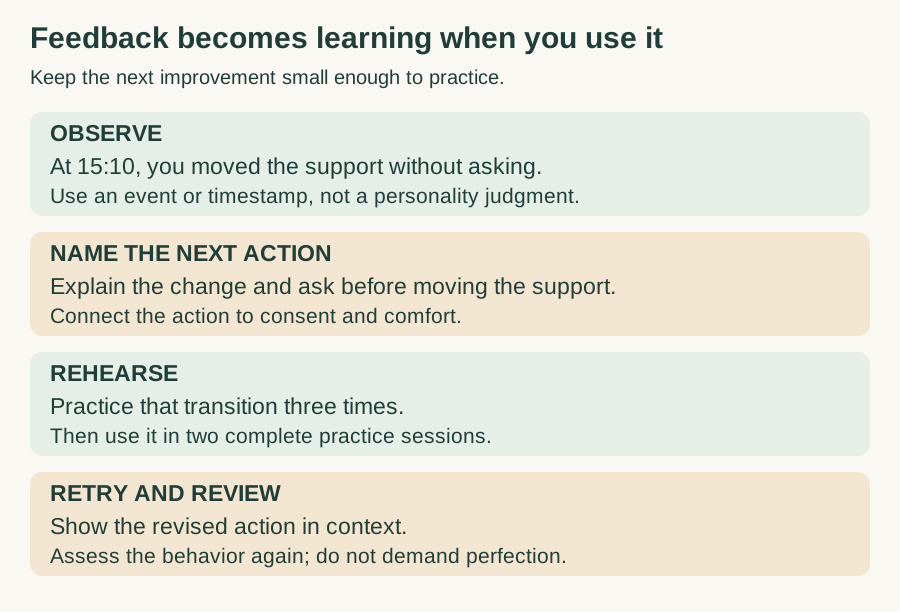
Feedback loop: observe, name, practice, and retry

Useful feedback names an event, explains why it matters, and identifies a next action. General encouragement may be kind, but “You are amazing” does not tell someone what to practice. Education research supports planning opportunities to act on feedback; the cited guidance comes from education settings, not validation of this reflexology curriculum. [2]

Example: “At 08:20, your partner asked for less pressure. You stopped immediately and checked again before continuing. Keep that response. At 15:10, you moved the support without explaining. Before moving it next time, ask permission and check the new position.”

A feedback conversation:

  • Reviewer: “What did you notice about the transition?”
  • Student: “I was concentrating on remembering the next movement.”
  • Reviewer: “That makes sense. Your next goal is to say what you plan to change and ask before doing it. Rehearse that transition three times, then use it in two complete sessions.”
  • Student: “I will practice the explanation and check that the new position works.”

Keep the first improvement plan to one or two behaviors. Rehearse, use them in a real practice session, and check whether they improved. Feedback is unfinished until the learner has a chance to use it.

If you disagree: refer to the timestamp and criterion, describe what you believe happened, and ask for clarification. A reviewable record protects both student and reviewer. Do not dispute a partner's discomfort by saying your intention was helpful.

My next behavior, practice opportunity, and evidence of improvement: ___

Lessons

Lesson 11.5 · Pausing, adapting, and recovering

Outcome: recover safely and recognize when you need more practice. Suggested time: 6 minutes.

A deliberate pause is not automatically a problem. An attentive pause may give the client space or allow you to check a preference. Getting lost repeatedly, leaving the person unsupported, or needing step-by-step coaching shows a gap that needs practice.

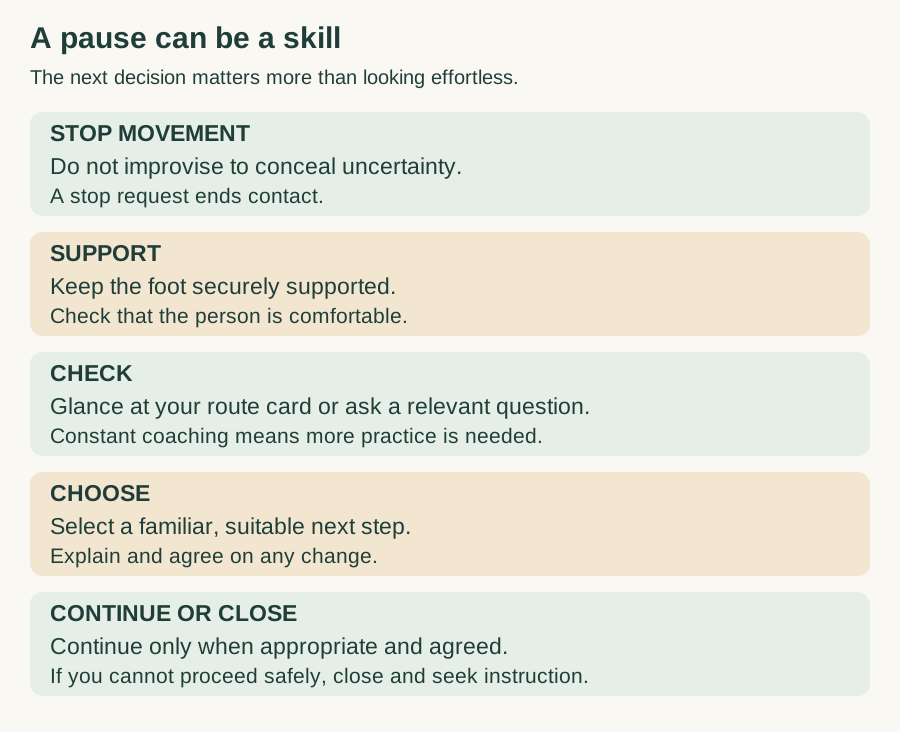
Recovery card: stop movement, support, check, choose, and continue only with agreement

When you lose your place

Stop the movement. Keep the foot supported or place it safely on its support. Check the partner's comfort. Look briefly at your route card if needed. Choose a familiar, appropriate next step and explain any change. If you cannot choose a safe next step, close the practice and seek instruction. A cue card is allowed; having another person direct every step is not independent performance.

Possible words: “I'm taking a moment to choose our next step. Are you comfortable here?” Avoid making the partner responsible for reassuring you.

A passing example: one brief pause, secure support, a comfort check, and an appropriate independent next choice. A developing example: repeated long interruptions that break continuity and require coaching, even when no one is harmed. A critical concern: continuing painful contact, disregarding “stop,” or adding an untaught maneuver to conceal uncertainty.

If a partner needs a change, acknowledge it, stop the current movement, agree on the adjustment, and check again. If the issue concerns suitability or is beyond your scope, stop and follow Section 2's referral guidance. Do not interpret symptoms as proof that the session is working.

Rehearsal: a partner says, “Could we skip that part?” Practice accepting the request without asking them to justify it. Then explain how you will simplify the remaining session. Repeat with “I would prefer to stop now.” The second response ends contact; it does not negotiate for another minute.

Lessons

Lesson 11.6 · Show the work clearly

Outcome: prepare evidence without turning every practice partner into a filmed client. Suggested time: 7 minutes.

Recommended model: students keep ordinary practice logs privately. Only learners choosing the practical assessment submit selected anonymized records and one continuous full-session recording, plus a short technique demonstration. Do not require a recording of every practice session. This reduces reviewer workload, storage, and participant exposure while retaining direct evidence of the final performance.

Evidence for optional assessment Proposed requirement What it shows
Practice summary Dates or session order, partner codes, durations, and goals for 12 sessions Repetition and variety; not proof of competence by itself
Two case reflections 150–250 words each; one adaptation and one learning difficulty Reasoning, factual attribution, and use of feedback
Technique demonstration 3–5 minutes: supported contact, one taught transition, response to a requested change Close view and explanation of foundational handling
Full-session recording About 30 minutes, continuous opening through close Communication, setup, flow, adaptation, and closing in context
Session record and self-review One brief record; rubric ratings with 3–5 timestamps Accurate documentation and reflective judgment

Use one willing adult practice partner, not a paying client recruited under pressure. The technique clip may be filmed separately; a clearly marked role-play request is acceptable there. Do not provoke pain or stage medical symptoms. Never present a scripted response as spontaneous client feedback.

A shorter session can still be the right decision. If the partner wants to stop, stop and keep that learning reflection. Arrange a new suitable recording to show a complete session rather than extending contact for the assessor. Accessible timing or recording arrangements can be agreed in advance while keeping the same observable criteria.

Camera and submission checklist

  • Obtain separate consent for touch and assessment recording; explain who will watch and how long access lasts.
  • Keep feet, hands, supports, and working posture visible. Frame out the face where possible; voice or other details may still identify the person.
  • Capture the consent conversation and check-ins clearly. Avoid music that masks speech.
  • Record a 20-second test and play it back before the session.
  • Use a stable device; do not handle it while touching the partner. Remove identifying paperwork and background people.
  • Record in real time without cuts, speed changes, or concealed coaching. Label the short demonstration separately.
  • Use a student ID in filenames, such as STUDENT42-session.mp4, not the partner's name.
  • Upload through the adopted private route, check access with the named reviewer, and retain a copy until receipt is confirmed.

If audio fails, the reviewer requests an accessible replacement or observed alternative. A written account cannot fully replace evidence of a conversation that cannot be heard. The draft page itself cannot accept uploads or issue credentials.

Lessons

Lesson 11.7 · Know what your certificate means

Outcome: distinguish completing learning from demonstrating practical skills. Suggested time: 6 minutes.

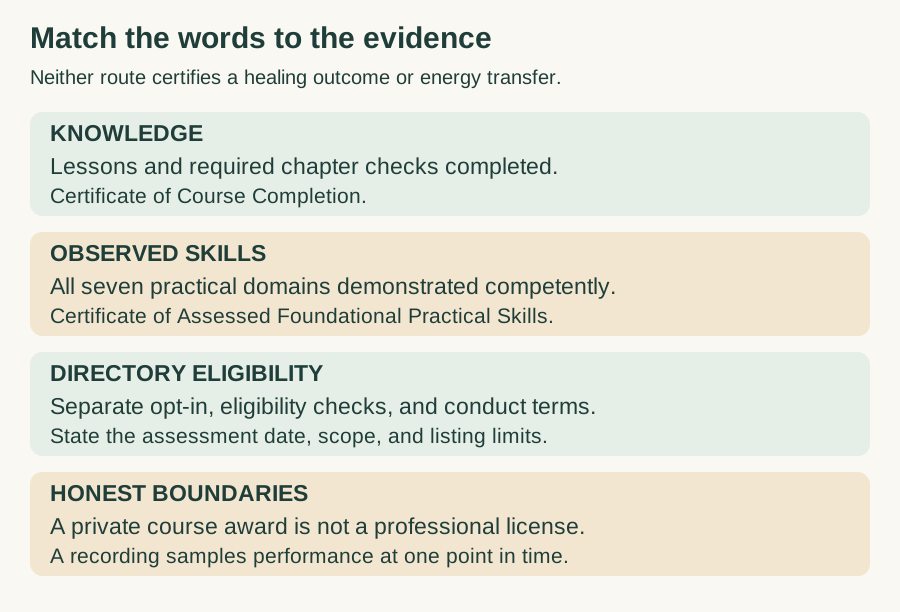
Evidence ladder: knowledge, observed skills, and separate directory eligibility

Route A: course completion

Complete all required lessons and chapter checks. For this section, the proposed check requires at least 10 of 12 correct and correct answers to all marked essential items. Correct misunderstandings and retry; there is no reason to make a learning quiz a one-attempt trap. Align other chapter thresholds before launch rather than assuming they already match this proposal.

Proposed certificate title: Certificate of Course Completion

Exact proposed wording: “This confirms that [Student name] completed Reflexology with Ruth: Foundational Course and met its required chapter knowledge-check criteria on [date]. This certificate records course completion and knowledge checks; it does not verify observed practical competence.”

Suggested footer: “Private course certificate. Not a professional license, independent accreditation, or authorization to practice where separate requirements apply.” Include issuer name, certificate ID, course version, and issue date. Do not state contact hours that were not tracked.

Route B: optional assessed practical skills

Meet the practice and submission requirements and pass every practical rubric domain and essential scenario. The practical certificate supplements the completion certificate; paying for review does not guarantee a pass.

Proposed certificate title: Certificate of Assessed Foundational Practical Skills

Exact proposed wording: “This confirms that [Student name] demonstrated the course's foundational feet-only session skills in submitted demonstrations and a continuous recorded session assessed by [reviewer name] on [date], against rubric [version]. Assessed areas were communication and consent, setup, contact, pacing, adaptation, closing, and documentation.”

Suggested footer: “Evidence is limited to the assessed submissions. This private certificate does not establish medical competence, treatment efficacy, independent professional accreditation, or legal eligibility to practice.”

Neither certificate verifies an energetic mechanism or promises client outcomes. Do not issue the practical certificate from quiz results alone. A completion badge and a practical-skills badge must look and read differently.

Website listing is a separate choice

Prefer “Practitioners who completed Ruth's foundational practical assessment” to a broad “approved provider” claim. If “approved” is retained, define it directly beside the listing. A recorded assessment is a sample at one point in time, not ongoing supervision or a guarantee of all future work. See the instructor policy page for proposed eligibility and removal procedures.

Practice & reference

Demonstration lab · Watch the decision

15 minutes: two short contrasts and one learner rehearsal. These are filming scripts; no video has been produced in this package.

Demonstration A: the lost-place moment, 4 minutes

Film Ruth playing two versions with a consenting model. Version one: the student hesitates repeatedly and asks an off-camera coach what comes next. Do not model harmful contact. Freeze the picture and ask: “Which skill needs rehearsal?” Version two: the practitioner stops movement, keeps support, checks comfort, glances at a route card, and chooses a familiar step independently. Show the partner's response.

Narration: “Both learners paused. What matters is what they did next. A useful pause protects the person and leads to a clear decision. If I need constant prompting, I need more rehearsal.”

Demonstration B: respond to feedback, 4 minutes

The model makes a scripted request: “Could that be lighter?” Show the practitioner stopping, acknowledging, asking what would feel better, adjusting within the taught method, and checking again. Caption the request “planned learning scenario.” Replay once with labels: hear → acknowledge → agree → adjust → check.

Freeze-frame questions: Was contact actually changed? Was the partner free to stop? Did the practitioner avoid explaining discomfort away? A reassuring sentence without a change in action is incomplete.

Learner rehearsal, 7 minutes

Rehearse the opening for two minutes, a supported transition for three minutes, and a recovery decision for two minutes. Have the partner give one concrete preference. Record one successful behavior and one next step. Contact practice requires the prior technique and safety prerequisites; otherwise rehearse the dialogue without touch.

Filming the full-session exemplar: record one separate continuous approximately 30-minute feet-only session. Suggested budget: opening and suitability/consent 4 minutes; setup and initial comfort 3; familiar contact and transitions 17; close and feedback 6. Total: 30 minutes. These are flexible blocks. Keep a real stop request even if it makes the exemplar unsuitable; record a new exemplar later. Add an optional annotated replay as a separate teaching video, preserving the original real-time version.

Practice & reference

Workbook · Practice log and partner feedback

Reusable form. Duplicate once per session. Use fictional data in this browser page. Entries are not saved automatically; print before closing. This learning form is not a client intake form or clinical record.

Student code / session number / date / partner code / approximate duration: ___

One skill I intended to practice: ___

Agreed areas, preferences, and relevant setup choices: ___

What I observed, without explaining its cause: ___

What the partner actually said; use quotation marks only for exact words: ___

What I changed, what happened next, and whether the session ended early: ___

One thing to keep and one behavior to rehearse next time: ___

Optional personal experience or interpretation, clearly labeled: ___

Partner feedback prompts: What was comfortable? What would you change? Was it easy to ask me to change or stop?

Partner response or “declined to comment”: ___

  • I recorded only necessary learning information and used a partner code.
  • I separated the partner's report, my observation, and my interpretation.
  • I identified a behavior I can practice, not a feeling I must create in someone else.

Summary tracker: make 12 rows with session number, partner code, duration, focus, feedback, and next action. Check that at least three partners appear at least twice and the final three entries are complete rehearsals. If extra practice is needed, keep adding rows; 12 is a starting minimum for this proposed route.

Practice & reference

Workbook · Case reflection and improvement plan

Submit two reflections for the optional practical route. One should show an adaptation; the other should show a difficulty and what changed after practice. Use 150–250 words each. A positive outcome is not required. An honest difficulty with a thoughtful response is valuable evidence.

Reflection prompts

What was agreed? What did you notice or hear? What did you do and why was it within your training? What feedback followed? What did you practice later? What is still uncertain?

My reflection: ___

Fictional worked example

“In session 5, P02 asked for a quiet feet-only practice with light contact. During a transition, they moved their foot and said, ‘That feels awkward.’ I stopped and checked whether the support or contact needed changing. They asked for the cushion to be repositioned. I explained the proposed change and obtained agreement before repositioning it using the setup method I had already learned. They then said the position felt comfortable. I resumed familiar contact and checked again before the next transition.

“I noticed that I had concentrated on the next step and missed the earlier shift in position. I cannot know what caused that shift without asking. Afterward, P02 said it helped that I stopped instead of continuing. I rehearsed the transition slowly three times, including the explanation. In the next session I asked about support before starting and after the first transition. My next goal is to keep those checks brief and natural. I felt more settled myself; that describes my experience, not a measured change in P02.”

Improvement plan

Observed gap and evidence or timestamp: ___

One targeted drill and how often I will rehearse it: ___

Where I will apply the change in two further practice sessions: ___

What a reviewer should see or hear when I retry: ___

Practice & reference

Scenario lab · Choose before revealing

Read each situation. Say what you would do before opening the model response. These scenarios explore judgment; the final essential items also appear in the knowledge check.

1. “I keep forgetting the next step.”

You are comfortable with each movement but lose your place at every transition.

Model response: Keep the partner supported and close if you cannot proceed safely. Rehearse the joins using a cue card, then complete two further rehearsals without step-by-step coaching. Repeated prompting means “developing,” not “ready” simply because the individual movements look good.

2. “It hurts, but perhaps that means it is working?”

The partner looks uncertain and asks whether to tolerate the discomfort.

Model response: Stop the current contact and clarify what they want. Do not explain pain as a beneficial release or encourage endurance. Resume only suitable, comfortable, agreed work; stop and follow the safety guidance if the concern is unresolved or outside your scope. Ignoring pain is a critical failure.

3. A quiet session with no special feeling

The partner says, “It was comfortable, but I did not feel energy.”

Model response: Accept the report and ask whether anything should change next time. A special sensation is not required. Score the practitioner's observable care, not the partner's willingness to use energetic language.

4. The recording is good, but consent was omitted

The student says that their friend “obviously knew” they were filming.

Model response: Do not use or circulate a recording without the required consent. Pause review and follow the adopted privacy process. Arrange a new, properly consented submission or approved observed alternative. Friendship is not consent to assessment recording.

5. You cannot see the hands

The recording shows only the practitioner's face and the partner's expression.

Model response: Mark contact and support as not observable, not passed. Request a targeted replacement if only a limited view is missing; require a new continuous session if full-session competence cannot be assessed. Poor framing is an evidence problem, not proof of unsafe skill.

6. The student wants immediate website approval

They passed every chapter quiz and have enthusiastic partner comments.

Model response: Issue only the completion certificate if its requirements are met. Explain that practical assessment is separate and directory eligibility has additional published terms. Testimonials and quiz scores cannot substitute for observed foundational skills.

Practice & reference

Knowledge check · Twelve questions

Choose one answer per question. Record A, B, or C before checking the answer key. This page is a self-check, not a connected grading or certificate system.

Proposed pass rule: at least 10/12 correct, with all essential questions—2, 4, 6, 8, 9, and 11—correct. Review explanations and retry missed questions with an equivalent scenario. No automatic practical pass follows from this quiz.

  1. Why practice with more than one partner? A: To guarantee results. B: To encounter different ordinary preferences. C: To diagnose more conditions.

  2. Essential. A partner says “stop.” A: Finish the movement sequence. B: Ask them to tolerate a little longer. C: Stop contact and check what they need.

  3. Which note is most useful? A: “P02 asked for lighter contact; I adjusted and checked again.” B: “The liver blockage cleared.” C: “Perfect energy.”

  4. Essential. The partner reports pain. A: Explain that pain proves release. B: Stop the current contact and clarify; follow safety guidance if unresolved. C: Continue silently.

  5. A brief supported pause followed by an independent safe choice is: A: Always a failure. B: Evidence of medical skill. C: Potentially competent recovery.

  6. Essential. Before filming, obtain: A: Separate consent for touch and recording, with reviewer and retention information. B: Only a course enrollment signature. C: No consent from friends.

  7. Best feedback is: A: “Be more gifted.” B: “Everyone loved you.” C: A specific observed event, next action, and retry opportunity.

  8. Essential. A quiz-based completion certificate demonstrates: A: Legal eligibility everywhere. B: Course completion and required knowledge checks. C: Observed practical mastery.

  9. Essential. A partner reports no energy sensation. A: Require them to try harder. B: Fail the student. C: Accept the report; assess observable skill.

  10. Twelve practice sessions means: A: A proposed minimum before practical review, with more practice if needed. B: A universal licensing standard. C: An automatic pass.

  11. Essential. A public or unlisted video link is: A: The same as named-person restricted access. B: Not the recommended assessment privacy setting. C: Required for assessment.

  12. A reviewer cannot see contact clearly. A: Assume it was correct. B: Score it as harmful. C: Mark it not observable and request the missing evidence.

My answers and items to revisit: ___

Practice & reference

Answer key · Explain the decision

  1. B. Different preferences develop asking and adaptation. Variety is not an invitation to take on complex cases.

  2. C. Consent can change. The route never outranks a stop request.

  3. A. It records a report, an action, and a recheck without inventing a mechanism.

  4. B. Discomfort requires a response, not an explanation that pressures the partner to endure it.

  5. C. Recovery can be competent. Repeated inability to proceed independently needs targeted rehearsal.

  6. A. Consent to touch is not consent to record, upload, teach from, or market with the recording.

  7. C. The learner needs a behavior they can practice and a chance to demonstrate improvement.

  8. B. The certificate must match the evidence. A quiz cannot establish observed handling skill.

  9. C. Spiritual interpretation and partner sensations are not practical pass conditions.

  10. A. The number is a curriculum proposal. Readiness still depends on demonstrated competence.

  11. B. Link sharing and private named access are different. Check the adopted platform's actual permissions. [3]

  12. C. Missing evidence is not evidence of either competence or harm. Obtain a view that allows assessment.

Remediation: revisit the linked lesson, explain the corrected reasoning in your own words, and answer a fresh equivalent scenario. Essential items must be understood before practical review, even if the total score is otherwise high. Any future learning platform should implement this rule explicitly; this draft does not record scores.

Practice & reference

Practical assessment · Observable rubric

Rate each domain separately: 0 = unsafe or materially incorrect; 1 = developing, requires prompting or inconsistent execution; 2 = competent and independent within foundational scope; N/O = not observable. A harmless self-correction can still earn 2. Record timestamps and a brief reason.

Pass rule: all seven domains at 2, no critical failures, complete required evidence, and correct essential scenario responses. Scores are not averaged; a strong manner cannot compensate for ignoring consent. N/O means evidence is incomplete, not a pass or an automatic failure.

Domain A rating of 2 looks like Further practice or evidence needed
Communication and consent Explains scope, agrees areas and preferences, gives a usable stop signal, checks understanding, honors changes Leading questions, unclear agreement, talking over responses, repeated prompts; ignored stop is critical
Setup and support Appropriate suitability check, hand hygiene, clean materials, stable comfortable positioning, safe supports and working posture Missed setup steps, avoidable strain, unstable supports; unsafe handling is critical
Contact and transitions Uses taught feet-only contact with support, checks pressure, changes contact when requested, transitions deliberately Jerky or unsupported transitions, inconsistency, reliance on coaching; painful persistence is critical
Pacing and continuity Maintains a manageable rhythm, leaves room for responses, protects closing time, recovers independently from a pause Repeated freezing, rushing the close, mechanical continuation despite needs
Observation and adaptation Separates observation from interpretation, asks relevant questions, changes the plan within scope, knows when to stop Assumes meanings, misses requests, needs prompting; diagnosis or unsafe continuation is critical
Closing and feedback Ends contact clearly, supports a comfortable transition, invites neutral feedback, agrees any follow-up Abrupt ending, leading praise requests, unsupported movement, pressure to rebook
Documentation and reflection Accurate minimal record, attributed reports, separate interpretations, relevant next goal, protected identity Invented statements, unnecessary identifiers, no actionable reflection; serious privacy breach is critical

Essential decision check: before a practical pass, the student must explain responses to a stop request, persistent pain or unresolved suitability, and an out-of-scope request. Use written or spoken scenarios; never create unsafe conditions in a session to test a reaction. Require all three correct: stop and respect choice; stop and follow appropriate safety/referral guidance; decline work beyond training and explain the limit.

Critical failures requiring remediation before passing: ignoring withdrawal of consent; continuing painful or clearly unsuitable work; unsafe handling; claiming to diagnose or treat disease through foot findings; recording/sharing without valid agreement; or falsifying evidence. A critical issue overrides numerical ratings. Stop review when continued access would worsen a privacy issue and follow the privacy process.

Do not score: whether the partner sleeps, cries, reports energy, expresses gratitude, leaves a testimonial, or shows a particular emotional change. Do not score personality, accent, eye contact, or spiritual vocabulary. Assess whether communication works for this partner, including agreed accessibility supports.

Reviewer / date / rubric version / ratings / evidence references: ___

Decision: pass, further practice, or additional evidence needed; reasons: ___

Production & sources

Instructor operations · Make review sustainable

Proposed pilot model, not a published service commitment. Ruth is the initial practical reviewer. If she delegates, appoint someone competent in this taught method and the assessment rubric, with confidentiality obligations and calibration using the same sample submissions. Administrative help may check file access and completeness, but does not award practical competence. Partner feedback and automated quizzes do not replace a qualified practical reviewer.

Compare the options

Option Benefit Cost or limit
Completion certificate only Lowest ongoing review burden; easy to explain No observed practical-skills claim
Completion plus optional paid practical review — recommended Keeps entry price accessible while funding personal assessment Requires limited review slots and clear service terms
Video from every practice partner/session More longitudinal evidence High consent, storage, upload, and reviewer burden; unnecessary for this proposed entry-level offer

Proposed review package

One 3–5-minute technique clip, one approximately 30-minute complete session, two reflections, summary log, and self-rubric. Provide a scored rubric and a 300–500-word written response with two strengths, no more than two priority improvements, and specific practice instructions. Offer one included reassessment of up to 10 minutes for an isolated gap; if the gap is consent, safety, repeated loss of flow, or whole-session integration, use one new full-session recording instead. Only one reassessment is included in this proposed package; the replacement length depends on the gap. Publish any later review charge before enrollment.

Proposed service window: initial review within 10 business days after complete, viewable evidence is accepted; learner has up to 60 days to submit the included reassessment; reassessment feedback within 10 business days of accepted resubmission. Offer reasonable access extensions by arrangement. Confirm the deadline in the receipt message. These terms need capacity testing before they become promises.

Workload example, not a pricing quote

Budget approximately 70 minutes per initial assessment: 5 minutes for intake/permissions, 35 for footage, 10 for written evidence and scoring, and 20 for feedback/admin. Reserve up to another 60 minutes for a full reassessment. Total worst-case review allocation: 130 minutes per learner. If Ruth has four review hours a week, begin with at most one new learner per week, leaving space for resubmissions and unexpected issues. Batch review on a predictable day; stop offering slots when the allocation is full.

Set the assessment price using 130/60 × the desired hourly compensation, then account for actual platform/payment costs and overhead. Time a small pilot before naming a price. Do not finance an unlimited video-review promise from the low entry fee.

Review workflow and fairness

Intake checks consent and access → reviewer watches the entire continuous recording → scores each domain with timestamps → compares written evidence → sends decision and improvement plan → learner practices → reassessment examines the missing skills and their integration. Do not skim only student-selected highlights while claiming a full-session review. For a borderline decision, use a calibrated second reviewer when available; do not advertise one unless arranged.

Allow a learner to request clarification within 14 days of the decision. Recheck the cited evidence against the rubric and correct scoring errors. If there is no independent appeal reviewer, say so clearly. Keep a dated decision record and do not turn a disagreement into a requirement to buy mentoring.

Production & sources

Instructor operations · Uploads, privacy, and listing

A realistic upload route

For a small pilot, a private learning platform with file submissions is simplest if already available. An alternative is a student-owned Google Drive file shared as Restricted, granting Viewer access to the named assessor's account. Google documents named sharing, restricted access, and permission management. [3] This is a workflow option, not a claim that Drive settings alone meet every privacy obligation.

Use MP4 with legible detail and intelligible audio; a 720p test may be sufficient but quality matters more than the label. Set and test a file-size limit once the platform is chosen. Upload over stable Wi-Fi, wait for processing, and verify playback before submission. If access fails, correct it through the named private route; do not make the video public. Offer an agreed live observed assessment at the same rubric standard where feasible; this requires separate scheduling and is not automatically included in the base course.

Recording agreement essentials

Explain the assessment purpose, the named reviewer and any agreed substitute, what is recorded, where it will be stored, who can access it, the proposed retention period, and how to request withdrawal or deletion. The partner can decline filming without losing access to ordinary unrecorded practice. Withdrawal during recording ends filming immediately. A later withdrawal before assessment may mean the learner needs a new submission; it does not justify pressuring the partner.

Suggested consent language: “I agree to this session being recorded and shared privately with the identified assessor for this student's course assessment. I understand that the recording may identify me by voice or other details. It will not be used for advertising, public teaching, or automated AI analysis under this agreement. I may ask to stop filming or contact the course administrator about withdrawal or deletion. I have received the storage, access, and deletion information.” Use separate selections/signatures for touch consent and recording consent; complete the actual administrator contact and storage details before use.

Proposed retention: delete assessor-held video and revoke access 90 days after the final decision or withdrawal, unless an agreed active appeal or applicable obligation requires a documented extension. Retain a minimal assessment outcome record for certificate verification under a separately published retention policy. Where the student owns the file, the course cannot guarantee deletion of their personal copy: require and confirm their deletion according to the agreement, explain this limitation, and distinguish it from assessor-held copies. Avoid public links, email attachments, shared household accounts, or automatic transcription/AI tools without a separate appropriate agreement. Publish the actual privacy contact and tested deletion process before opening submissions.

Directory proposal

Launch the course without automatic website listing. If a directory is later introduced, require an assessed pass, voluntary listing consent, accurate public claims, agreement to conduct/complaint terms, and any locally applicable eligibility and insurance evidence established by the published policy. Course assessment does not decide legal practice eligibility; requirements depend on location and should be checked before commercial practice.

Show the assessment date, course/rubric version, assessed scope, and the limits of the listing. Proposed wording: “Completed Ruth's foundational feet-only practical assessment on [date]. Listing reflects that course assessment and is not a guarantee of treatment outcomes or continuing supervision.” Review listings annually for contact accuracy and policy eligibility; that check is not a fresh practical assessment unless one actually occurs. Provide a complaint contact, a fair review process, and criteria for suspension/removal. Keep internal assessment files private. Do not imply accreditation, endorsement of medical claims, or oversight that does not exist.

Practice & reference

Reviewer response · Reassessment that teaches

Fictional feedback example

“You have demonstrated clear consent and responsive pressure adjustment. At 03:10, you explained the stop signal and waited for agreement. At 11:45, you stopped immediately when P01 asked for lighter contact.

“Your current decision is further practice. Pacing and continuity is rated 1: at 17:20 and 20:05 you needed another person to tell you the next step. Closing is also rated 1: you ended abruptly without a feedback invitation. The other five domains are rated 2; no critical failure was observed in this example.

“Practice the two transitions three times each using a route card. Complete two further sessions in which you independently choose the next step and reserve time for closing. Then submit one new continuous session with its short record. This counts as your included reassessment because the gaps involve whole-session integration. You do not need to repeat the already adequate technique clip unless the new recording raises a related concern. Your goal is a supported, independent transition and an unhurried, clear close—not perfect memorization.”

Reassessment decision

Rescore the affected domains and verify that the whole-session submission still supports the previously demonstrated skills. Do not carry forward a prior passing score over a new critical failure. If all criteria are met, issue the practical certificate with the new assessment date. If not, provide the remaining gaps and explain any further review options without implying a guaranteed eventual pass.

Reviewer form: Two observed strengths and timestamps: ___

One or two priority improvements and rubric domains: ___

Required practice and resubmission evidence: ___

Due date, included-review status, and clarification route: ___

Final decision, evidence reviewed, and certificate eligibility: ___

Production & sources

Production notes and research

What Ruth supplied

Ruth is considering short or approximately half-hour session videos but is concerned about upload logistics and review time at a lower course price. She is considering a completion certificate based on chapter questions and an additional practical certificate and possible provider listing after video review. She reports that her earlier training required 100 SOAP notes and does not want to reproduce that requirement. She emphasizes presence and an energetic perspective over tissue fault-finding and rote performance. These are her supplied account and preferences, not independently verified outcomes or finalized business terms.

What this package adds

The 12-session/three-partner pathway; seven-domain rubric; 10/12 knowledge threshold with essential items; evidence package; reviewer model; response times; reassessment terms; certificate language; upload, retention, and directory policies; scenarios; forms; and filming scripts are author-developed proposals. The energetic perspective is presented as Ruth's experience. No clinical mechanism, professional accreditation, or measured client benefit is asserted.

Filming and launch checklist

  • Ruth adopts or edits the practice minimum and confirms compatibility with earlier sections, especially Section 6's practice-video proposals.
  • Align all chapter-check thresholds and define tracked completion before issuing Route A certificates.
  • Record the two demonstration contrasts and one continuous exemplar; add accurate captions and a transcript.
  • Calibrate the rubric on at least two example performances before assessing paying learners.
  • Choose and test private submission, receipt, permissions, deletion, and certificate-ID verification workflows.
  • Confirm actual reviewer availability, review price, service windows, accessibility arrangements, and reassessment terms.
  • Complete the recording/privacy agreement with actual contacts and platform details before collecting footage.
  • Keep directory listing separate until its eligibility, complaint, and removal policies exist.

These are production steps, not missing lesson text. This package supplies the written curriculum and original visuals; no filming, upload service, certificate issuance, or website listing has been performed.

Sources and how they were used

[1] NCCIH: Reflexology. Official overview. Supports the distinction between reflexology theory and established evidence; does not validate this course, an energetic mechanism, or a practice-hour threshold.

[2] Education Endowment Foundation: Feedback. Teaching and learning toolkit. Informs the use of specific feedback and opportunities to act on it. School-education evidence is used as a teaching-design aid, not direct evidence for adult reflexology assessment.

[3] Google Drive Help: Share files from Google Drive. Official sharing instructions. Supports the description of restricted, named-person access. Does not establish legal compliance or promise that a recipient cannot copy a recording.

Sources checked September 24, 2026. The practice counts, pass rules, capacity estimate, service windows, and certificate models are explicit curriculum recommendations rather than requirements taken from those sources.

A note for this section

Review workspace

Where your comments live

Connect to the website to share notes with each other. On a static host, use this browser and export your comments to share them.

The access code is in the separate upload guide. Everyone with it can read, edit and resolve review notes.


Device comments are kept in this browser, not sent to anyone. Export a backup before clearing browser data or switching devices.